Standard Picture Frame Sizes
The most common picture frame sizes are 4×6, 5×7, 8×10, 11×14, 16×20, 18×24, and 24×36 inches. Stores stock these sizes, and most photos, prints, and posters are cut to fit them. Below is the full chart, the mat pairings, metric equals, and what to do when your art does not match any of them.
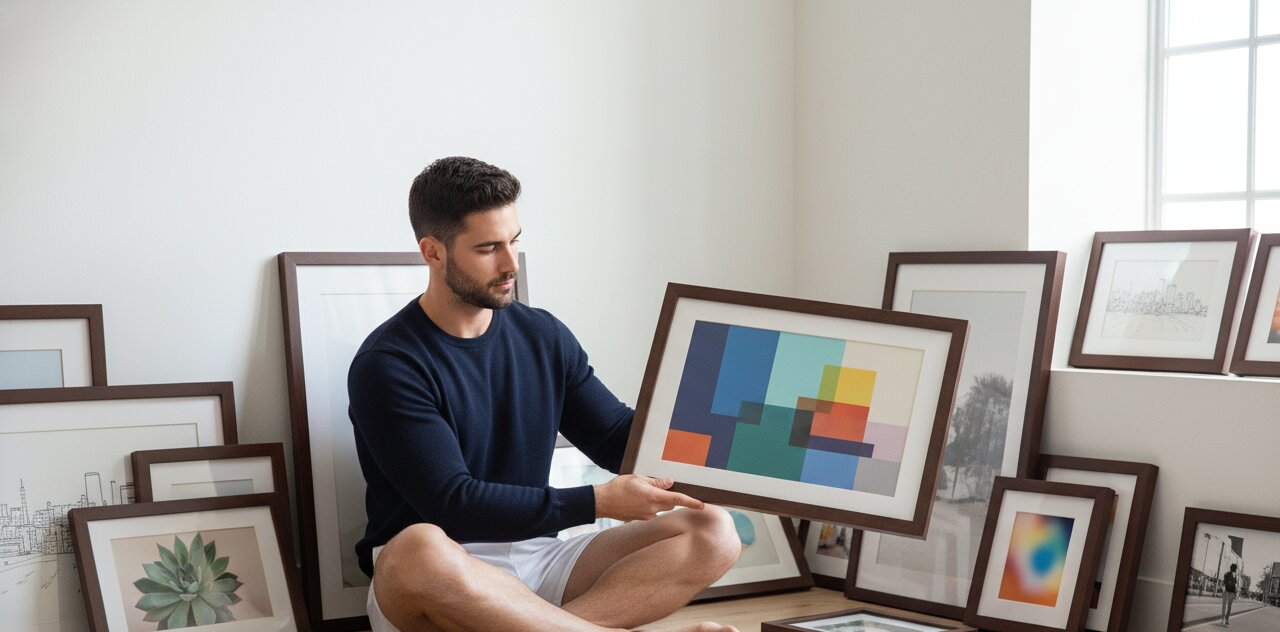
What are the standard picture frame sizes?
Standard sizes exist for one reason: big retailers stock them. IKEA, Target, Michaels, and Walmart all carry the same handful of sizes, so print makers cut photos and posters to match. Learn these and you can walk into almost any store and find a frame that fits.
Here is the full chart. The mat opening is what you see if you add a mat, cut about a quarter inch smaller than the print on each side so it holds the edges. Use it to match a print, a poster, or a document to a frame.
| Frame / print size (inches) | Typical mat opening | Common use | Standard poster or print? |
|---|---|---|---|
| 4×6 | 3.5×5.5 | Photos, snapshots | Universal photo size |
| 5×7 | 4.5×6.5 | Photos, greeting-card prints | Universal photo size |
| 8×10 | 7.5×9.5 | Photos, small prints, certificates | Universal print size |
| 8.5×11 | 8×10.5 | Documents, letter prints, small diplomas | Common (letter paper) |
| 11×14 | 10.5×13.5 | Prints, portraits, larger diplomas | Common print size |
| 12×16 | 11.5×15.5 | Photography (3:4), art prints | Common |
| 12×18 | 11.5×17.5 | Photography (2:3), art prints | Common |
| 16×20 | 15.5×19.5 | Posters, prints, portraits | Standard poster size |
| 18×24 | 17.5×23.5 | Posters, large prints | Standard poster size |
| 20×30 | 19.5×29.5 | Large posters, enlargements | Standard poster size |
| 24×36 | 23.5×35.5 | Large posters, statement prints | Standard poster size |
| 27×40 | 26.5×39.5 | Movie posters (one-sheet) | Standard movie poster |
What size frame for an 8×10 print (and other common prints) with a mat?
A mat is the flat border between the art and the frame. It does two jobs: it gives the eye room to rest, and it lets a smaller print sit in a larger frame. The rule is simple. To hold a print, the mat opening is cut about a quarter inch smaller than the print on each side. To pick the frame, you add the mat border you want on top of the print size.
For an 8×10 print, that means a 7.5×9.5 inch opening. Put that opening in an 11×14 frame and you get a clean 2 inch border on every side. Want a wider, more gallery look? Use a 12×16 frame for a 3 inch border. Here are the pairings people use most.
| Print size | Frame size with a mat | Mat border width | Look |
|---|---|---|---|
| 4×6 | 8×10 | ~2 in | Small photo, framed up |
| 5×7 | 8×10 | ~1.5 in | Everyday photo |
| 8×10 | 11×14 | ~2 in | Portrait, print |
| 11×14 | 16×20 | ~2.5 in | Gallery print |
| 16×20 | 20×24 | ~2 in | Statement wall art |
| 18×24 | 24×30 | ~3 in | Poster, framed to sell |
No rule says you must use these exact pairings. A wider mat reads as more premium, a thinner mat as more modern. If you want to see how each border looks before you commit, order a few sample chips and hold them against your print.
What are the finished frame outer dimensions?
Buyers of framed art almost always ask the same thing: how much wall does it take up? The finished frame is bigger than the print because the moulding wraps around the outside. As a rule of thumb, a finished frame extends about 1 to 3 inches per side beyond the print, depending on how wide the moulding is. A slim metal or modern moulding sits near the 1 inch end. A wide, ornate moulding sits near the 3 inch end.
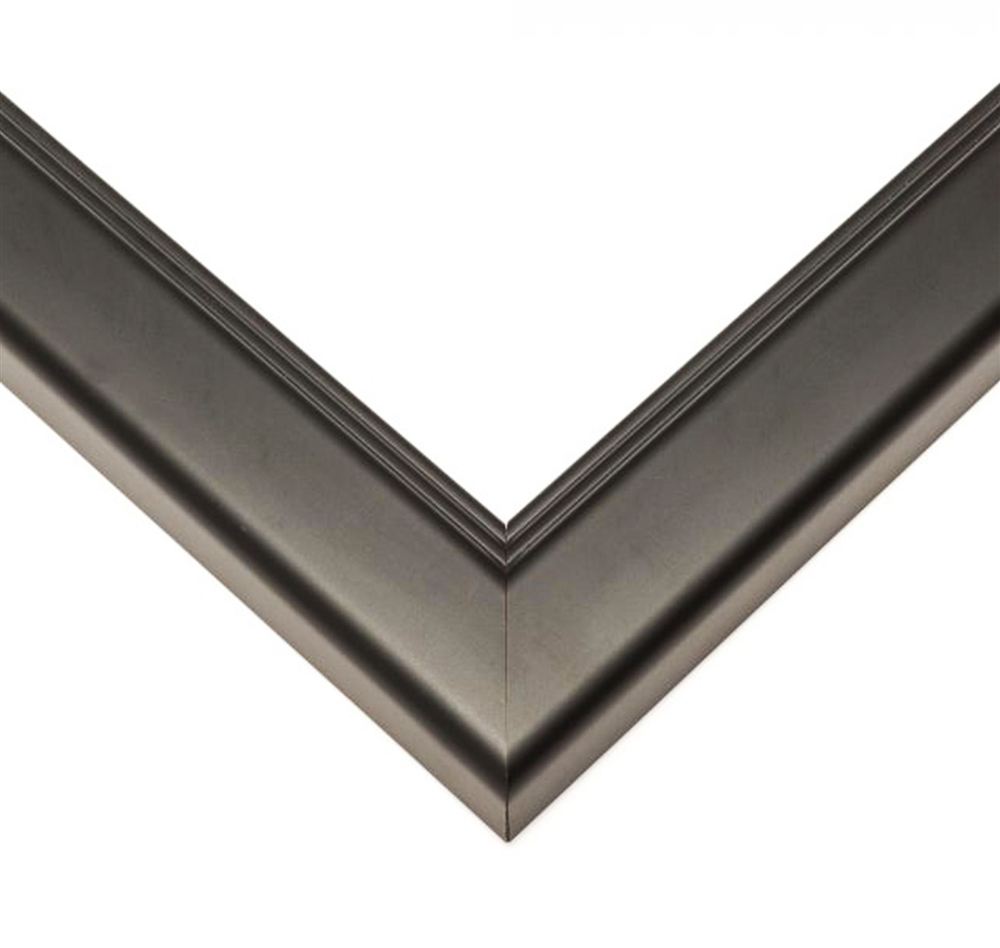
| Print size | Outer size, slim moulding (~1 in face) | Outer size, wide moulding (~3 in face) | Good moulding choices |
|---|---|---|---|
| 8×10 | 10×12 | 14×16 | Thin metal, modern wood, ornate gold |
| 11×14 | 13×16 | 17×20 | Gallery black, oak, wide museum |
| 16×20 | 18×22 | 22×26 | Matte black, walnut, wide gold |
| 18×24 | 20×26 | 24×30 | Barnwood, modern silver, wide black |
| 24×36 | 26×38 | 30×42 | Wide oak, mahogany, statement moulding |
Add a mat and the finished size grows again by twice the mat border. A 16×20 print with a 2 inch mat and a slim moulding finishes near 22×26. When you sell framed art, show the finished size on the product page, not just the print size, so buyers know exactly what arrives. You can see face widths and depths for every profile on the materials page.
Metric vs US picture frame sizes
Prints from Europe, Australia, and most design software use metric sizes: the A series (A5, A4, A3, A2, A1) and centimeter sizes like 30×40 cm and 50×70 cm. US frames use inches. The two systems are close but almost never identical, so a metric print usually needs a mat or a custom frame to sit inside a US size. This chart lines them up.
| Metric size | Millimeters | Inches (approx) | Closest US frame |
|---|---|---|---|
| A5 | 148×210 | 5.8×8.3 | 5×7 or 6×8 |
| A4 | 210×297 | 8.3×11.7 | 8.5×11 |
| A3 | 297×420 | 11.7×16.5 | 11×14 or 12×16 |
| A2 | 420×594 | 16.5×23.4 | 16×20 or 18×24 |
| A1 | 594×841 | 23.4×33.1 | 24×36 |
| 30×40 cm | 300×400 | 11.8×15.7 | 12×16 |
| 50×70 cm | 500×700 | 19.7×27.6 | 20×28 (custom) |
Notice how often the "closest" US size is still off by a fraction of an inch. That gap is exactly the problem a mat or a custom frame solves.
What if my art is not a standard size?
This is the case for most real art. A full-frame camera shoots 3:2, which does not match 4:5 or 4:3 frames. A watercolor might be 13×17 inches. A panorama might be 12×36. None of those fit a stock frame. You have three ways to handle it, and only one keeps the whole image and the right shape.
- Crop the art to fit a stock frame. Fast and cheap, but you cut off part of the image.
- Add a mat to bridge the gap. Works when the art is a little smaller than a standard size, but it will not save an odd shape.
- Order a custom frame cut to the exact size. Keeps the whole image and the true proportions. This is what a real frame shop does.
Here is the part most people get wrong: custom sizing does not cost much more. The real cost driver is the perimeter, the total inches of moulding cut, not the size category. A 16.5×22.75 frame costs about the same as a 16×22, because it uses about the same length of moulding. Read the full breakdown in our guide on made-to-order frames vs stock sizes.
This is what FramesOnDemand does. We cut frames to any size from 4×4 inches up to 72 inches combined width plus height. Fractional sizes cost no extra, so a 16.5 inch print is priced like a 16 inch one. You get 40 solid wood mouldings plus canvas profiles, more than 80 styles in all, and 46 mat colors. Pricing scales with perimeter, with no "custom" surcharge tacked on.
Standard sizes are just the frames stores keep in stock. Your art has its own size. A custom frame fits the art instead of forcing the art to fit the frame, and on a perimeter-priced shop it costs about the same.
Frame sizes for canvas
Canvas follows the same standard sizes as prints: 8×10, 11×14, 16×20, 18×24, 24×36, and so on. The difference is depth. A stretched canvas is about 0.75 to 1.5 inches thick, so it does not sit in a flat frame the way paper does. Canvas uses a float frame, a frame with a small gap that lets the canvas sit inside with a shadow line around it, so the art looks like it is floating.
Because the frame wraps the depth, a float frame adds very little to the outer size, usually under an inch on each side. A 16×20 canvas in a float frame finishes near 17×21. If you sell canvas, our framed canvas guide covers depths, float gaps, and the profiles that suit gallery work.
Frequently asked questions
What are the most common picture frame sizes?
The most common picture frame sizes in the United States are 4×6, 5×7, 8×10, 11×14, 16×20, 18×24, and 24×36 inches. Stores stock these sizes, and most photos, prints, and posters are cut to fit them.
What size frame do I need for an 8×10 print?
For an 8×10 print with no mat, use an 8×10 frame. If you want a mat border around it, use an 11×14 frame with a mat opening of about 7.5×9.5 inches. That gives a clean 2 inch mat border on every side.
What size mat goes with an 8×10 photo?
A mat opening is cut about a quarter inch smaller than the photo on each side so it holds the edges, so an 8×10 photo gets a 7.5×9.5 inch opening. Set that opening inside an 11×14 frame for a 2 inch border, or a 12×16 frame for a wider 3 inch border.
Are picture frame sizes the same as poster sizes?
Many overlap. Standard poster sizes are 16×20, 18×24, 24×36, and the 27×40 movie one-sheet, and frames are made in all of them. But posters also come in sizes like 11×17 and metric sizes that do not always match a stock frame, so check the exact dimensions before you buy.
What is the difference between metric and US frame sizes?
US sizes are measured in inches, like 8×10 and 16×20. Metric sizes use the A series and centimeters, like A4 (about 8.3×11.7 inches) and 50×70 cm (about 19.7×27.6 inches). They are close but rarely identical, so a metric print usually needs a matted mount or a custom frame to sit in a US size.
What if my art is not a standard size?
You have three choices: crop the art to fit a stock frame, add a mat to bridge the gap, or order a custom frame cut to the exact size. A custom frame is the only option that keeps the whole image and the right proportions. FramesOnDemand cuts frames to any size from 4×4 inches up to 72 inches combined width plus height, with fractional sizes at no surcharge.
How much bigger is a frame than the print?
A finished frame extends about 1 to 3 inches per side beyond the print, depending on how wide the moulding is. A slim moulding on an 8×10 print gives roughly a 10×12 outer size. A wide moulding gives closer to 14×16. Adding a mat makes the finished piece larger still.
Frame any size, standard or not
Upload your image, type any dimensions in fractional inches, and preview every frame and mat at exact size. Custom cut and shipped from one New Jersey shop since 2015.
Get early access